


The Complete Guide to Non-Alcoholic Beer in 2026
Your weeknight routine deserves a drink that keeps up with you. Non-alcoholic beer has moved far beyond its bland reputation, and today's craft options deliver hop character, malt complexity, and real mouthfeel in every sip. This guide covers everything you need to know to pick the right non-alcoholic beer for your next Tuesday night on the couch or a casual dinner with friends.
You'll learn what separates a quality alcohol-free brew from a forgettable one, which styles work for different moods and meals, and how to stock your fridge with beers worth cracking open any night of the week. Grüvi makes award-winning non-alcoholic beers and wines that put flavor first, and we'll show you how those fit into the bigger picture of mindful drinking.
Key Takeaways: The Complete Guide to Non-Alcoholic Beer in 2026
- Non-alcoholic beer contains less than 0.5% ABV, and many options now offer true 0.0% alcohol for full peace of mind.
- Lagers, IPAs, stouts, and sours all have standout alcohol-free versions with distinct flavor profiles worth exploring.
- Grüvi's World Beer Cup Gold medal-winning Golden Lager shows that craft non-alcoholic beers rival their traditional counterparts.
- Reading labels for ABV, calorie count, and ingredients helps you find non-alcoholic beers that match your taste and goals.
- Stocking a few different styles at home turns any weeknight into an occasion for mindful drinking without compromise.
What Is Non-Alcoholic Beer and How Is It Made?
Non-alcoholic beer is brewed using many of the same grains, hops, yeast, and water as traditional beer. The key difference is that brewers either halt the process before significant alcohol develops or remove the alcohol after brewing through dealcoholization techniques.
Most non-alcoholic beers contain less than 0.5% ABV. Some labels read 0.0% alcohol, which means the brew has been processed to remove virtually all traces of alcohol. These are two distinct categories, and understanding the labels helps you choose the right one.
Modern craft brewers use methods like arrested yeast processes, specialty yeast strains, and vacuum distillation to keep flavor intact. The result is a beer that retains hop character, malt backbone, and carbonation while staying alcohol-free.
Key Dealcoholization Methods in Craft Brewing
Arrested processes involve stopping yeast activity before it converts much sugar into alcohol. This preserves sweetness and body but requires careful recipe design to avoid an overly malty or wort-like finish.
Vacuum distillation heats the beer under reduced pressure, evaporating alcohol at lower temperatures. This protects delicate hop oils and aromatic compounds that higher-heat methods would strip away.
Some brewers use specialty yeast strains that produce minimal alcohol naturally. These strains ferment the beer enough to develop flavor complexity while keeping alcohol levels negligible. Grüvi uses proprietary brewing techniques across its lineup to ensure each style tastes true to form.
Why Ingredients Still Matter in Alcohol-Free Beer
The quality of raw materials has an outsized impact on non-alcoholic beer. Hops sourced for their aromatic properties give IPAs their citrus and tropical notes. Premium malts add color, body, and toasty depth to stouts and lagers.
Grüvi sources ingredients from GFSI Certified suppliers, a food safety standard that ensures consistency and traceability. When a non-alcoholic beer tastes dull or thin, the culprit is often cheap ingredients rather than the absence of alcohol.
Water chemistry plays a role too. Mineral content affects mouthfeel, hop perception, and finish. Craft brewers adjust their water profiles to match the style they're brewing, the same way traditional brewers do.
Why Non-Alcoholic Beer Is Growing So Fast
The category is booming. According to a 2025 NBC News report citing IWSR data, non-alcoholic beer grew 9% by volume worldwide in 2024 and is projected to overtake ale as the second-largest beer category globally. In the U.S., Circana reported that non-alcoholic beer sales reached nearly $583.4 million in the 52 weeks ending December 2025, up 22.1% in dollar sales.
Millennials hold the largest share of non-alcoholic beer drinkers, according to IWSR. The motivation isn't always sobriety. Many buyers still purchase traditional beer for some occasions while adding alcohol-free options for midweek evenings, early mornings before a run, or nights when they simply want the taste of beer without the after-effects.
Industry analysts at NielsenIQ note that the trend aligns with occasion-based moderation rather than total abstinence. Flavor innovation from craft brewers is making it easier than ever to find a non-alcoholic beer you enjoy.
How to Read Non-Alcoholic Beer Labels
ABV: Less Than 0.5% vs. 0.0% Alcohol
In the U.S., "non-alcoholic" legally means less than 0.5% ABV. That trace amount is comparable to what you'd find in ripe fruit or fresh-baked bread. For reference, a traditional lager sits around 4 to 5% ABV.
Some brands go further and label their products 0.0% alcohol, indicating a more thorough dealcoholization process. If avoiding all alcohol matters to you, look specifically for the 0.0% designation on the can or bottle.
Calories, Sugar, and Ingredients
Most non-alcoholic beers clock in at roughly 50 to 90 calories per serving, making them a lower-calorie alternative to traditional beer. Check the label for added sweeteners, as some brands use sugar to compensate for body lost during the brewing process.
Grüvi's Golden Lager, for example, keeps calories low while maintaining a crisp, clean profile. Its beers contain no added sugar, and several options are gluten-free, vegan, and kosher-friendly.
Non-Alcoholic Beer Styles: Finding Your Flavor
Non-Alcoholic Lager
Lagers are the most approachable style in the alcohol-free space. They're crisp, clean, and refreshing. A well-brewed non-alcoholic lager pairs with pizza, tacos, or a simple bowl of pasta on a weeknight.
Grüvi's Golden Lager earned a World Beer Cup Gold medal, a credential that speaks directly to what's in the glass. The flavor is light, balanced, and finishes clean. It's the kind of beer you reach for when you want something easy but still interesting.
Non-Alcoholic IPA
IPAs translate well to the alcohol-free format because hops carry most of the flavor. Citrus, pine, tropical fruit, and floral notes come through regardless of ABV. If you love craft IPAs, the non-alcoholic versions are closer than you'd expect.
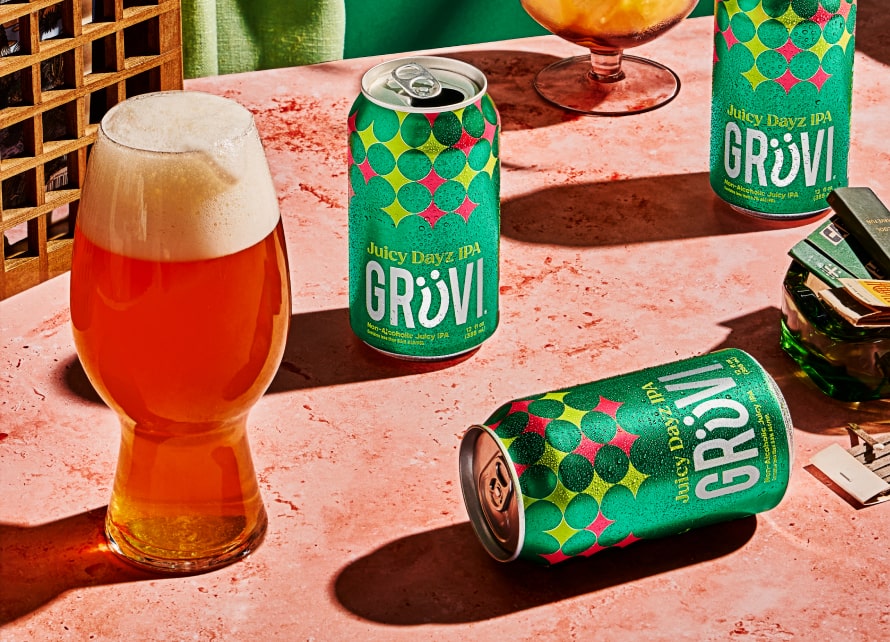
Grüvi's Juicy IPA delivers bold hop character and a hazy body. It won a USA Beer Rating Gold Award, confirming that alcohol-free IPAs can hold their own in blind taste tests alongside traditional craft.
Non-Alcoholic Stout
Stouts bring richness and depth to the alcohol-free lineup. Think notes of chocolate, caramel, dark fruits, and roasted barley. These flavors don't depend on alcohol to express themselves, so the style holds up well.
Grüvi's Mocha Moment Stout leans into chocolate and coffee flavors with a smooth, full mouthfeel. It's a good match for cooler evenings or as a post-dinner sip alongside something sweet.
Non-Alcoholic Sour
Sours are one of the most exciting non-alcoholic styles because their tart, fruity character naturally fits a lower-alcohol profile. The acidity and fruit-forward flavors stay vibrant even when alcohol is removed.
If you like bright, tangy beers that lean toward berries, stone fruit, or citrus, non-alcoholic sours are worth exploring. They also pair well with lighter weeknight fare like salads, grilled fish, or summer dishes.
Non-Alcoholic Pale Ale and Wheat Beer
Pale ales sit between lagers and IPAs on the flavor spectrum. They offer a bit more hop presence than a lager but stay balanced and drinkable. Wheat beers are soft, slightly hazy, and lean toward citrus and spice.
These styles are crowd-pleasers. If you're hosting a casual weeknight get-together and want something that works for a wide range of palates, a non-alcoholic pale ale or wheat beer is a reliable pick.
How to Choose the Right Non-Alcoholic Beer for Weeknight Drinking
Match the Beer to the Moment
Think about what you're doing. Cooking dinner? A crisp lager keeps things light. Unwinding on the couch after a long day? A stout or dark ale adds a layer of comfort. Eating something spicy? A citrusy IPA can cut through the heat.
Non-alcoholic beer works for the same occasions as traditional beer. The difference is that you can enjoy it on a Monday, skip the headache on Tuesday, and still feel the ritual of cracking open something cold.
Taste Before You Commit to a Case
Palates vary. A non-alcoholic lager that one person loves might fall short for someone who prefers bold hop bitterness. Try singles or variety packs before buying in bulk. Grüvi offers sampler options that let you taste across their lineup of beers and wines so you can find your favorites.
Consider Your Dietary Needs
If you're watching calories, sugar, or gluten, non-alcoholic beer can work for you. Many options are low calorie, and some are gluten-free. Grüvi's beers are vegan, gluten-free, and kosher-friendly, making them a fit for a range of dietary preferences.
How to Store and Serve Non-Alcoholic Beer at Home
Store your non-alcoholic beer cold. Just like traditional beer, temperature matters. Refrigeration preserves carbonation, freshness, and flavor integrity.
Serve in a glass when you can. Pouring into a pint glass, tulip, or even a mason jar opens up the aroma and makes the drinking experience more enjoyable. You'll notice more of the hop character in an IPA or the chocolate notes in a stout when you let the beer breathe.
Single-serve bottles and cans are ideal for weeknight drinking. They preserve carbonation better than larger formats and reduce waste. Grüvi's single-serve packaging is designed with this in mind.
Pairing Non-Alcoholic Beer with Weeknight Meals
Lagers with Casual Comfort Food
A non-alcoholic lager pairs with burgers, pizza, grilled chicken, and tacos. The clean finish refreshes your palate between bites. Grüvi's Golden Lager holds up alongside bold flavors without overpowering the food.
IPAs with Spicy or Bold Dishes
The citrus and pine notes in a non-alcoholic IPA cut through spice and rich sauces. Think Thai curry, buffalo wings, or a plate of nachos loaded with jalapeños. The hop bitterness balances heat.
Stouts with Desserts or Rich Entrées
A non-alcoholic stout with notes of chocolate and caramel pairs well with barbecue ribs, mushroom risotto, or a simple brownie. The roasted malt adds depth that complements smoky, savory, or sweet flavors.
Sours with Lighter Fare
Tart, fruity sours match well with salads, goat cheese, grilled seafood, or fruit-based desserts. The acidity cleanses your palate, making each bite taste fresh. For more pairing inspiration, Grüvi's recipe collection features creative food and mocktail ideas built around their lineup.
What Makes Mindful Drinking Different from Sobriety
Mindful drinking isn't about giving up alcohol entirely. It's about choosing when and how much you drink based on how you want to feel. For many people, that looks like swapping in a non-alcoholic beer on weeknights and saving traditional drinks for weekends or special events.
This approach keeps the social ritual intact. You still have a cold beer in hand. You still pair it with dinner. The only thing missing is the morning-after regret. And as the category grows, the options available to mindful drinkers keep getting more interesting.
Grüvi was built for this community. The brand's lineup of beers and wines gives you craft-quality choices for those everyday moments when you want flavor and celebration without alcohol.
Step-by-Step: How to Transition to Non-Alcoholic Beer
Step 1: Identify Your Go-To Beer Style
Start by thinking about what you drink now. If you reach for a pale lager on most nights, a non-alcoholic lager is a natural first pick. IPA fans should start with a hop-forward non-alcoholic IPA. Matching your existing preference to an alcohol-free equivalent lowers the barrier to enjoying it.
Step 2: Buy Small and Explore
Pick up singles or a mixed variety pack rather than a full case. This lets you sample different brands and styles without committing to something you might not love. Many craft producers, including Grüvi, offer sampler packs designed for exactly this purpose.
Step 3: Swap One Weeknight at a Time
You don't have to go all-in at once. Try replacing your Tuesday or Wednesday evening drink with a non-alcoholic option. Over a few weeks, you'll build a sense of which styles and brands fit your routine. Most people find the transition feels natural once they discover a beer they look forward to opening.
Step 4: Build Your Rotation
Once you've found two or three favorites, keep them in regular rotation. Stock your fridge with at least one lighter option and one darker or bolder option. This way you have a choice that matches your mood every evening.
Step 5: Bring Non-Alcoholic Beer to Social Settings
Take your favorites to dinner parties, barbecues, or casual hangouts. Non-alcoholic beer sparks conversation and introduces friends to options they might not have tried. Grüvi's single-serve bottles make it easy to share a few with your crew.
How to Build a Non-Alcoholic Beer Fridge for Any Occasion
Stock three to four styles so you always have something that fits the mood. A lager for the easy nights. An IPA for when you want something with more personality. A stout for the slower evenings. And a sour or wheat beer for warm-weather cooking.
Rotate your selection seasonally. Lighter styles like lagers and wheat beers work in summer. Stouts and dark ales feel right in fall and winter. Grüvi's full lineup spans enough styles to keep your fridge interesting year-round.
Set up a subscription if you find a few favorites. This way, your fridge stays stocked without the last-minute store run. Grüvi's subscription service saves you up to 10% and gives you early access to limited Discovery Series releases developed with customer feedback.
Health and Wellness Considerations for Non-Alcoholic Beer
Calorie and Sugar Comparison with Traditional Beer
A standard 12-ounce craft beer contains roughly 150 to 250 calories depending on the style and ABV. Non-alcoholic versions of the same styles typically land between 50 and 90 calories. That reduction comes primarily from the absence of alcohol, which contributes about 7 calories per gram.
Sugar content varies by brand. Some producers add sweeteners to restore body lost during dealcoholization. Others, like Grüvi, keep their beers free of added sugar and rely on recipe design and brewing technique to maintain mouthfeel.
Gluten-Free, Vegan, and Kosher Options
Dietary labels are increasingly common in the non-alcoholic beer space. If you follow a gluten-free diet, look for beers brewed with gluten-free grains or processed to reduce gluten below detectable levels.
Grüvi's beer lineup is gluten-free, vegan, and kosher-friendly. These attributes make it a reliable choice for anyone managing specific dietary needs while still enjoying craft beer flavor.
How Non-Alcoholic Beer Fits a Wellness Routine
For those who run, cycle, or train regularly, non-alcoholic beer offers a way to enjoy the social ritual of a cold beer without the dehydrating effects of alcohol. Some research suggests that the polyphenols and electrolytes in beer may support post-exercise recovery, though individual results vary.
Non-alcoholic beer also supports better sleep quality compared to its alcoholic counterpart. Removing alcohol from the equation means you skip the disruptions to REM sleep that even moderate drinking can cause.
Common Mistakes When Choosing Non-Alcoholic Beer
Judging the entire category by one bad experience is the most common misstep. Non-alcoholic beer quality varies dramatically across brands and styles. If one lager disappointed you, a craft IPA might win you over.
Another mistake is expecting non-alcoholic beer to taste identical to its alcoholic counterpart. These are brewed differently, and the flavor profile reflects that. Approach them on their own terms, and you'll find options that stand on their own merit.
Skipping the label is a missed opportunity. Checking ABV, calorie count, and ingredient lists helps you avoid products loaded with sugar or artificial additives. The craft producers, including Grüvi, tend to use simpler ingredient lists and more traditional brewing approaches.
In Conclusion: How to Find Your Perfect Weeknight Non-Alcoholic Beer
Picking the right non-alcoholic beer comes down to knowing your flavor preferences, matching styles to occasions, and trying enough options to find your go-to rotation. The category has evolved dramatically, and the craft end of the spectrum delivers real flavor, real variety, and real satisfaction.
Start with a style you already enjoy in the traditional beer world, then explore from there. Keep your fridge stocked with a few different options, and don't be afraid to experiment with food pairings. Every weeknight is a chance to discover something new, hangover-free.
FAQs About Non-Alcoholic Beer in 2026
Is non-alcoholic beer truly alcohol-free?
Most non-alcoholic beers contain less than 0.5% ABV, a trace amount similar to ripe fruit. Products labeled 0.0% alcohol have undergone additional processing to remove virtually all alcohol.
How many calories are in a non-alcoholic beer?
Typical non-alcoholic beers range from 50 to 90 calories per serving. Grüvi keeps calories low across its lineup, with beers that contain no added sugar and stay under 60 calories per bottle.
What non-alcoholic beer style is closest to traditional beer?
Lagers and IPAs translate particularly well. Grüvi's Golden Lager won a World Beer Cup Gold medal for its crisp, authentic taste, making it a reliable starting point for anyone new to alcohol-free craft beer.
Can you drink non-alcoholic beer every day?
Yes. Non-alcoholic beer is lower in calories and contains no significant alcohol. Many people incorporate it into their daily routine as part of a mindful drinking approach. Grüvi's gluten-free, vegan options fit a range of dietary lifestyles.
Where can you buy non-alcoholic beer?
Non-alcoholic beer is available at most grocery stores, specialty retailers, and online. Grüvi ships directly to your door and is stocked at thousands of retail locations across the U.S. and Canada.
Does non-alcoholic beer taste the same as regular beer?
Not identical, but close. Craft non-alcoholic beers from producers like Grüvi use real brewing techniques and quality ingredients. The flavor stands on its own and rewards drinkers who approach it with an open palate.